Posts From Namibia
At sea (West Africa, Namibia)
Journal entry for Wednesday 1st Apr, 2026 (day 42, miles 0)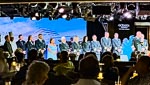
As mentioned in yesterdays post, Capetown was a changeover point from one cruise to the next. It was also a point at which there was a chnage over for a lot of the staff. We noticed this last night at dinner with a lot of new faces amongst the restaurant staff. So today the Captain (who has not changed) held a cocktail party to introduce the new members of his senior staff.
...click/tap to read the full postWild Horses (Luderitz, Namibia)
Journal entry for Thursday 2nd Apr, 2026 (day 43, miles 0)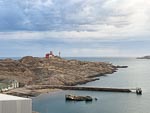
This morning we pulled into the port of Luderitz, a small town or village, in southern Namibia and at the southern end of the Namibian Desert which is called The Namib. The country of Namibia is famous for this coastal desert, which is the oldest desert in the world, and which runs the full length of the Namibian coast, starting in South Africa and running north into Angola. As you can see from the photos below the desert is a mix of sand and stone and is very dry getting on average about 15mm of rain per year.
...click/tap to read the full postMoonscape (Walvis Bay, Namibia)
Journal entry for Friday 3rd Apr, 2026 (day 44, miles 0)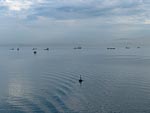
This morning we pulled into the harbor of a town called Walvis Bay which is the main sea port for Namibia. It has a long history of contact with Europeans dating back to 1485 when nearby Cape Cross was visited by Diogo Cao and 1487 when Bartolomeu Dias anchored in Walvis Bay itself. Interestingly while Walvis Bay is one of the few places on the Namibian coast that provides good anchorage for ships it has no natural water supply even today. That handicap explains the near by town of Swakopmund which sits at the mouth of the similarly named Swakopmund River and hence has a water supply but does not have any form of protected acnhorage for ships. So the two towns are somewhat symbiotic. Swakopmund provides the water and Walvis Bay provides a lifeline to the rest of the world. Incidentally the names reflect their earlier colonial history with Walvis Bay being English and Swakopmund being German. Tourism is the main business of both towns.s
...click/tap to read the full post