Moonscape
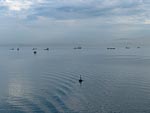
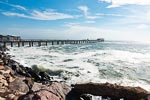
This morning we pulled into the harbor of a town called Walvis Bay which is the main sea port for Namibia. It has a long history of contact with Europeans dating back to 1485 when nearby Cape Cross was visited by Diogo Cao and 1487 when Bartolomeu Dias anchored in Walvis Bay itself. Interestingly while Walvis Bay is one of the few places on the Namibian coast that provides good anchorage for ships it has no natural water supply even today. That handicap explains the near by town of Swakopmund which sits at the mouth of the similarly named Swakopmund River and hence has a water supply but does not have any form of protected acnhorage for ships. So the two towns are somewhat symbiotic. Swakopmund provides the water and Walvis Bay provides a lifeline to the rest of the world. Incidentally the names reflect their earlier colonial history with Walvis Bay being English and Swakopmund being German. Tourism is the main business of both towns.s
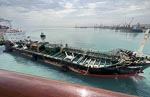
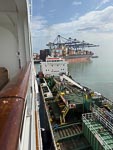
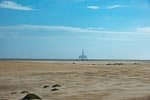
As you can see from some of the early photos below our ship took on fuel today, a ship called an "oiler" pulled up beside us after we had docked and spent a few hours pumping fuel into the cruise ships "bunkers".
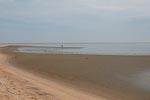
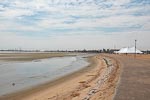
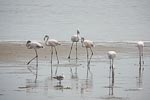
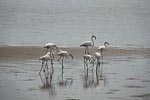
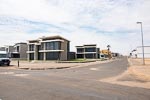
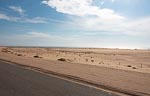
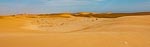
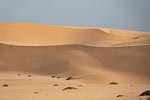
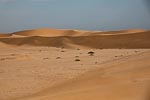
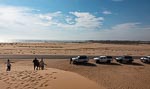
Our excursion today started with a short tour of Walvis Bay. We had a quick look at the Walvis Bay lagoon and the pelicans and flamingoes that feed in the lagoons shallow water, and along the way we saw a lot of newish looking buildings that seemed mostly to be tourist accommodation. Sand was everywhere, after all this is in the middle of a desert, and some of the roads are lined with palm trees in an effort to provide protection from the strong South East winds that are common on the Namibian coast.
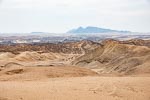
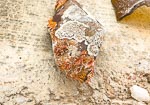
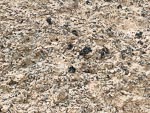
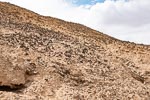
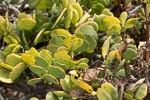
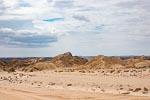
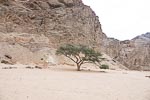
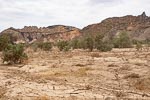
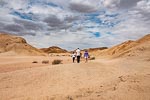
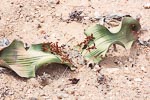
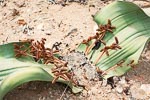
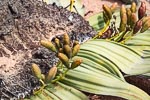
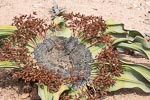
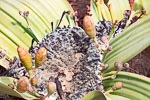
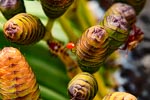
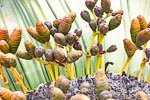
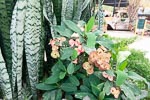
After a look around town we headed up the good quality highway towards Swakopmund before turning inland to an area called The Moon Landscape. As it turned out this is an area that is basically in and near the bed of the Swakopmund River that has been cleared of sand by the irregular water flow of the river to expose a large area of carved volcanic rocks. It is also an area which has some very unusual plants. The green plant pictured below and tagged Source of bitter liquid is called a Dollar Plant as its leaves are approximately round like a silver dollar. The rocks in this area often have Lichen growing on them and the colours vary from dark almost black to red. For those who are desperate lichen can be a source of food and the dollar plant can be squeezed for liquid to drink. The most unusual of the local plants is the Welwitschia Plant (click here). This is a very slow growing and long lived plant, named after the Austrian Botanist who documented the plant in the 1850s. The plant only has two leaves one each side and those leaves get split to look like multiple leaves by the sun and wind. The age of the plant can be estimated measuring the width of the plant's center using the distance across the knuckles of a human hand as the units, 100 years for each hand. The plants are dioecious, meaning some plants are male and some female.
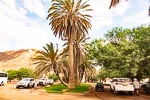
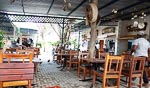
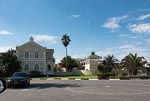
After exploring the moon landscape area we stopped for a snack and drink at Goanikontes Oasis, a nice place with camping, accommodation, restaurant and bar, before a quick tour of Swakopmund and back to Walvis Bay.
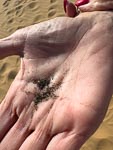
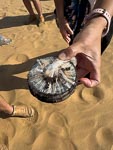
On the final leg back to Walvis Bay our guide used a magnet wrapped in plastic to demonstrate that the black particles in the sand were iron.